
Why do couples choose a church wedding, or not?
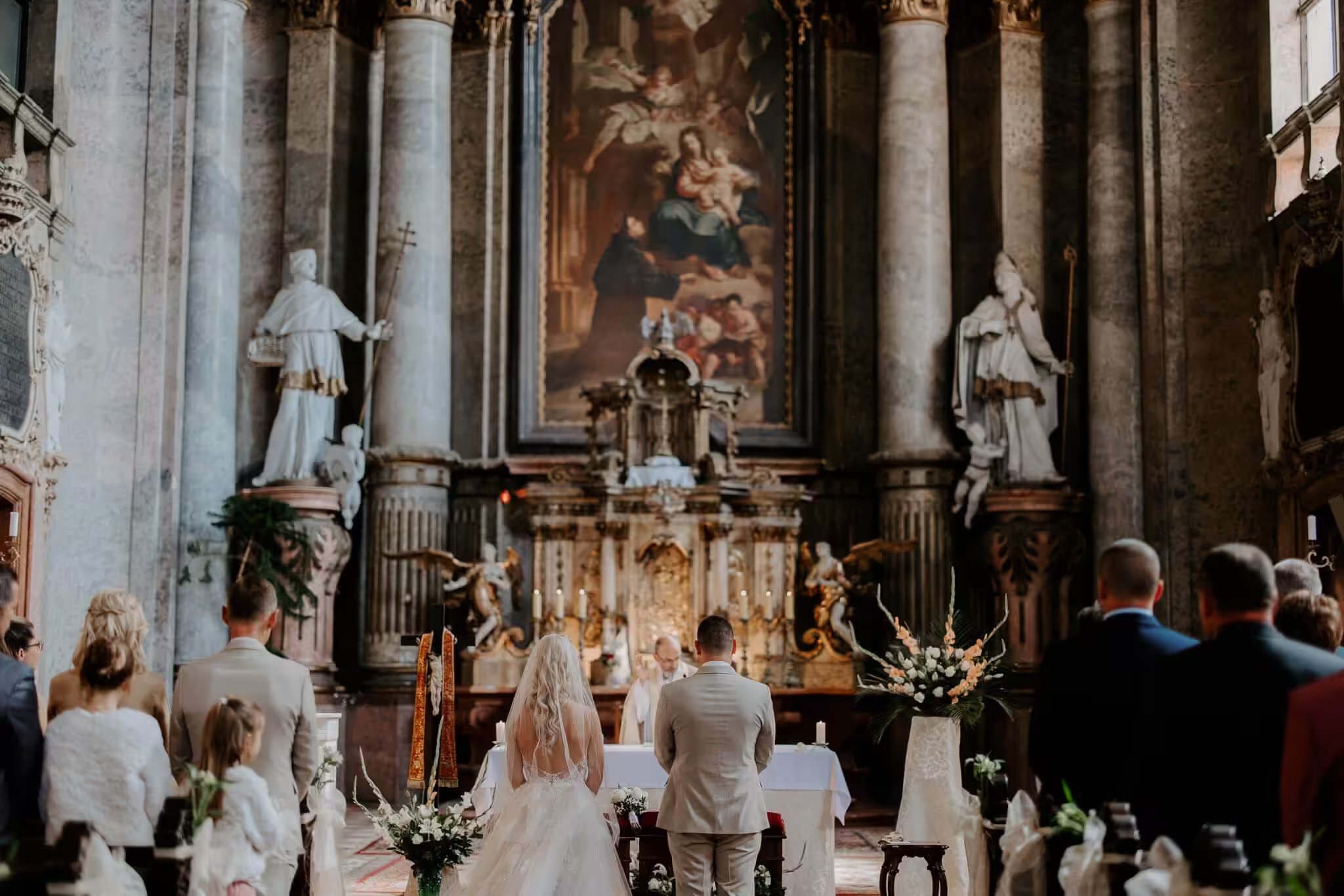
A religious marriage is a deeply meaningful experience in the life of every couple, whether they choose to marry in a church or somewhere else. A church wedding is the first step towards a harmonious life together and can offer a strong framework of values and support, as well as a chance for the couple to connect more deeply with their faith and spirituality.
Still, not every couple chooses to marry in church or to have a religious marriage. Some are not religious, some have different beliefs, and some do not follow the dogma or practices of the church, so they choose another type of wedding ceremony.

Pros and cons of a church wedding
Pros of a church wedding
- Spiritual support: a religious marriage can offer a strong spiritual framework that helps the couple grow in faith and connect more deeply with the divine.
- Shared values: it can give the couple a common base of values and make sure they are on the same page about faith and way of life.
- Community support: the religious community can offer support and encouragement that helps the couple through everyday obstacles.
- Tradition and meaning: it can be a meaningful experience and a chance to be part of a tradition that matters to the couple.
Cons of a church wedding
- Restrictions: some faiths impose restrictions on marriage, such as requirements about the partner or bans on marriage between certain ethnic or religious groups, which some people find frustrating.
- Dogma: some church dogmas or practices can be controversial or unacceptable to some people, which makes a religious marriage difficult.
- Pressure: some people feel pressure from family or community to marry in a certain church or to follow certain religious requirements, which can be stressful.
The most important thing is for the couple to decide together what suits them best, from the venue to whether or not to have a religious ceremony. A marriage should be built on solid values and a strong connection between partners, whatever the venue or type of ceremony.

To have a religious wedding ceremony in Romania, Romanian citizens must meet these conditions:
- Be married civilly first. Before the religious marriage, you register and conclude the civil marriage at a civil registry office.
- Be of legal age to marry. In Romania, the legal age of marriage is 18.
- Bring the necessary documents. You will need your passports, your birth certificates and the civil marriage certificate. Other documents may also be needed, such as your parents’ marriage certificate or proof that you are not already married.
- Find a priest to officiate. You can marry in an Orthodox, Catholic or other church recognised by the Romanian state, with a priest who meets all of the church’s requirements.
- Meet all the church’s requirements. Each church has its own requirements for religious marriages, such as pre-marriage preparation courses or blessing ceremonies. Make sure you meet them all before the wedding.

For the civil part, see my guide to getting married in Romania. I hope this helps you plan your wedding. Your wedding day brings joy and memories beyond price.
If you want your wedding photographs to show how your most important day really went, browse my wedding galleries, with a selection of the weddings I have photographed.
My advice for every couple: choose the photographer who can capture your day exactly as you imagine it. See my wedding photography in Romania.