
How do you plan a wedding without stress? Start with the date and the venue (booked 12–18 months ahead), continue with the civil registry paperwork, choose your key suppliers (photographer, band, florist) and send invitations at least 3 months before the event.
Where do you start when planning a wedding?
Planning a wedding takes on average 12 to 18 months, and the sooner you understand the order of the steps, the less stress you collect along the way. The most important thing: the venue is booked first, not last. Good venues fill quickly, sometimes more than a year before the date. See my list of favourite wedding venues in Romania, with city lists for Cluj-Napoca, Bucharest, Târgu Mureș and Sibiu.
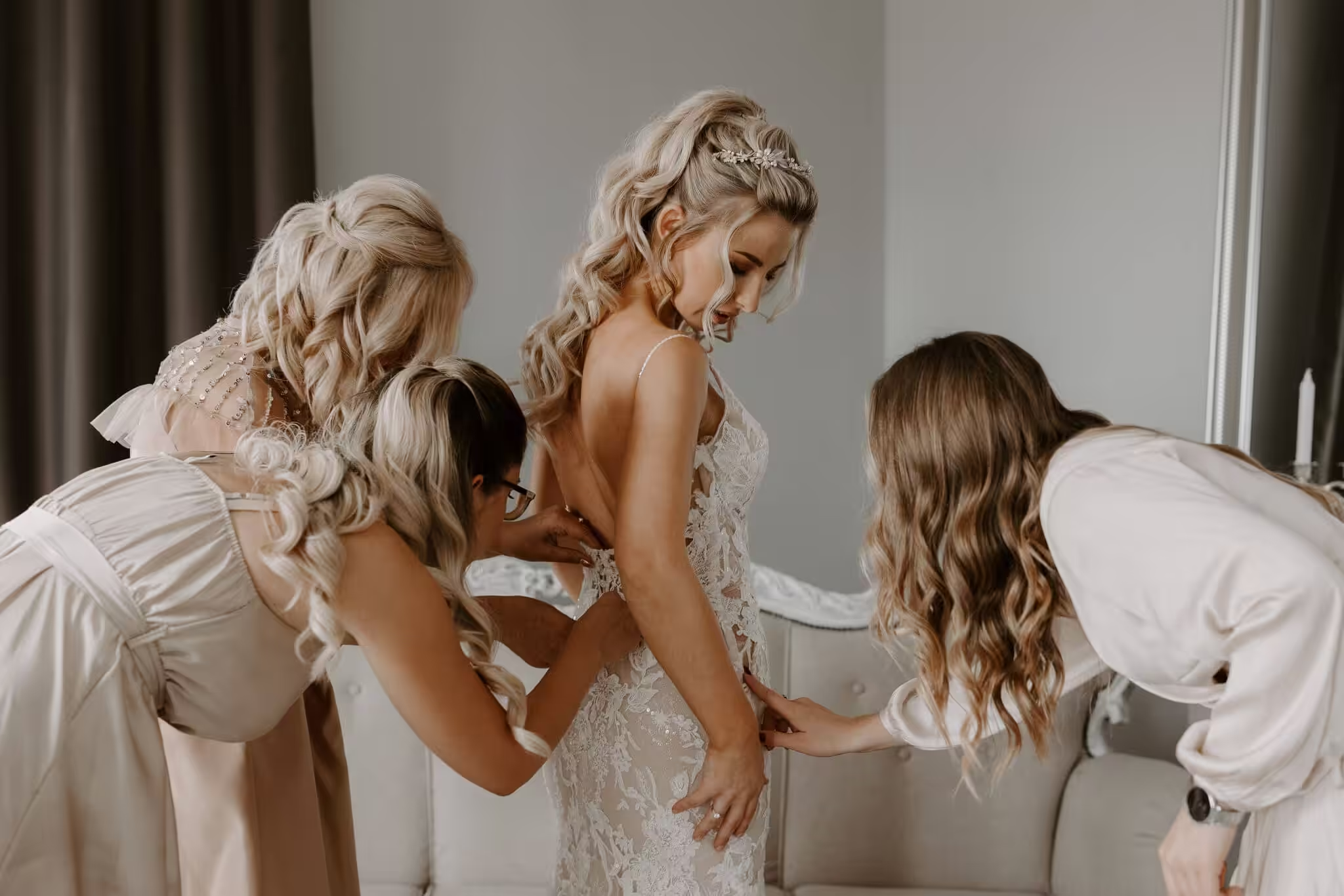
Wedding checklist: what to do at each stage
The simplest way not to get lost is to split the 12–18 months into stages and treat each as a short list, not a mountain. The order below is the one I see working at the weddings I photograph.
12–10 months before: the foundation
- Set the total budget and who contributes, before any talk with suppliers.
- Make a rough guest list, because it decides which venue you can choose.
- Book the venue and, in parallel, check the church for the same day.
- Book the photographer and videographer, which fill up more than a year ahead for good dates.
- Choose your godparents and talk about their responsibilities early.
9–6 months before: the main suppliers
- Band or DJ: a good band is booked almost a year ahead.
- Wedding dress: ordering plus fittings takes 4–6 months on average.
- Florist and decor: ask for a moodboard and set the colour palette.
- Pastry: the cake and the candy bar, with a tasting if possible.
- Accommodation for guests from other cities: block rooms at a hotel near the venue.
- For an outdoor wedding, set the weather plan now.
5–3 months before: the details people see
- Order invitations and send them 2–3 months ahead.
- Save the date or engagement session, so the photographs go on your invitations.
- The groom’s suit, rings and accessories.
- Hair and make-up trial, not left for the last month.
- The final menu with the restaurant, including vegetarian and children’s options.
- File the paperwork for the religious ceremony with the parish.
2–1 months before: tie up the threads
- Guest confirmations, with a clear deadline on the invitation.
- The seating plan.
- File the civil registry paperwork (11 calendar days before the wedding).
- The day schedule, with the arrival time of each supplier sent to everyone in writing.
- Discuss the photo list with your photographer: moments and people who must not be missed.
The last month and the wedding day
The last month is about confirmations, not new decisions; see the section on what to do one week before. On the wedding day, your only real task is to be present: hand the contact list to a trusted friend or your godparents and let them answer the phones.
How do you choose the wedding date?
The right date depends on three factors: your favourite season, the venue’s availability and your key suppliers’ calendars (photographer, band). If you have no fixed date in mind, start from the venue’s availability and sync the other suppliers around it. The months with the highest demand in Romania are May, June, September and October. For an outdoor wedding, also plan a backup in case of bad weather.
How do you set the guest list?
The guest count decides almost everything else: which venue you can book, what the wedding costs and how intimate it feels. At Romanian weddings the average is 100–150 guests, and the difference between 100 and 150 is almost 8,000 euro in extra cost, because food and drink are paid per person. The method that works best: each side (the couple, the bride’s parents, the groom’s parents) makes a separate list, then you put them together and split the names into three groups:
- Must be there: close family, godparents, friends without whom the day makes no sense.
- We would love to have: second-degree relatives, good friends, close colleagues.
- Only if it fits the budget: acquaintances, work colleagues, courtesy invitations.
Cut from the third list until you reach the number that fits your budget and venue. Decide from the start whether children are invited and whether guests bring a partner, and say so on the invitation. On average, 10–15% of invited guests do not attend.
What documents do you need for the civil ceremony?
The civil ceremony is the legal basis of the marriage. The file is filed with the civil registry 11 calendar days before the ceremony; both the filing day and the wedding day count. So for a Saturday ceremony, the documents are usually filed on the Tuesday of the previous week, depending on the town hall’s public hours. The documents are:
- Birth certificates (original and copy)
- Identity cards or passports (original and copy)
- Proof of the end of a previous marriage, if applicable (divorce decree or death certificate, original and copy)
- 4 fiscal stamps
- Receipt for the marriage fees
Everything in detail, including foreign citizens, is in my guide to getting married in Romania. A practical tip: hand the paperwork to a trusted sibling or friend so you have more time for the creative decisions.
How much does a wedding cost in Romania?
Costs vary with guests, city, season and supplier level. As a realistic reference for 2027, a wedding with 100 guests in Romania costs 25,000–40,000 euro, and most of it goes in one direction: food and drink, paid per person. The average split for a modern wedding with 100 guests in a large city, out of peak season:
- Restaurant, menu and drinks: 44% (about 15,800 euro, 158 euro per person)
- Photographer and videographer: 13% (4,700 euro)
- Music, DJ or band: 9% (3,150 euro)
- Decor and florist: 9% (3,150 euro)
- Outfits, rings and accessories: 9% (3,150 euro)
- Fees for the civil and religious ceremonies: 2% (700 euro)
- Invitations and stationery: 2% (700 euro)
- Favours and gifts: 2% (840 euro)
- Transport and logistics: 1.5% (525 euro)
- Bridal preparations: hair, make-up, trial: 1% (420 euro)
- Reserve for the unexpected: 7% (2,600 euro)
The scale changes with guests and city: the same wedding costs about 28,000 euro at 50 guests and more than 51,000 at 200. Bucharest adds about 20% over the national average, and a winter wedding costs about 10% less than one in peak season. To start from the sum you have and divide it by category, read my wedding budget guide. The most commonly miscalculated item is hidden costs: transport between locations, accommodation for suppliers, service fees and tips. Add a reserve of 10% to the total.
How do you choose the restaurant and venue?
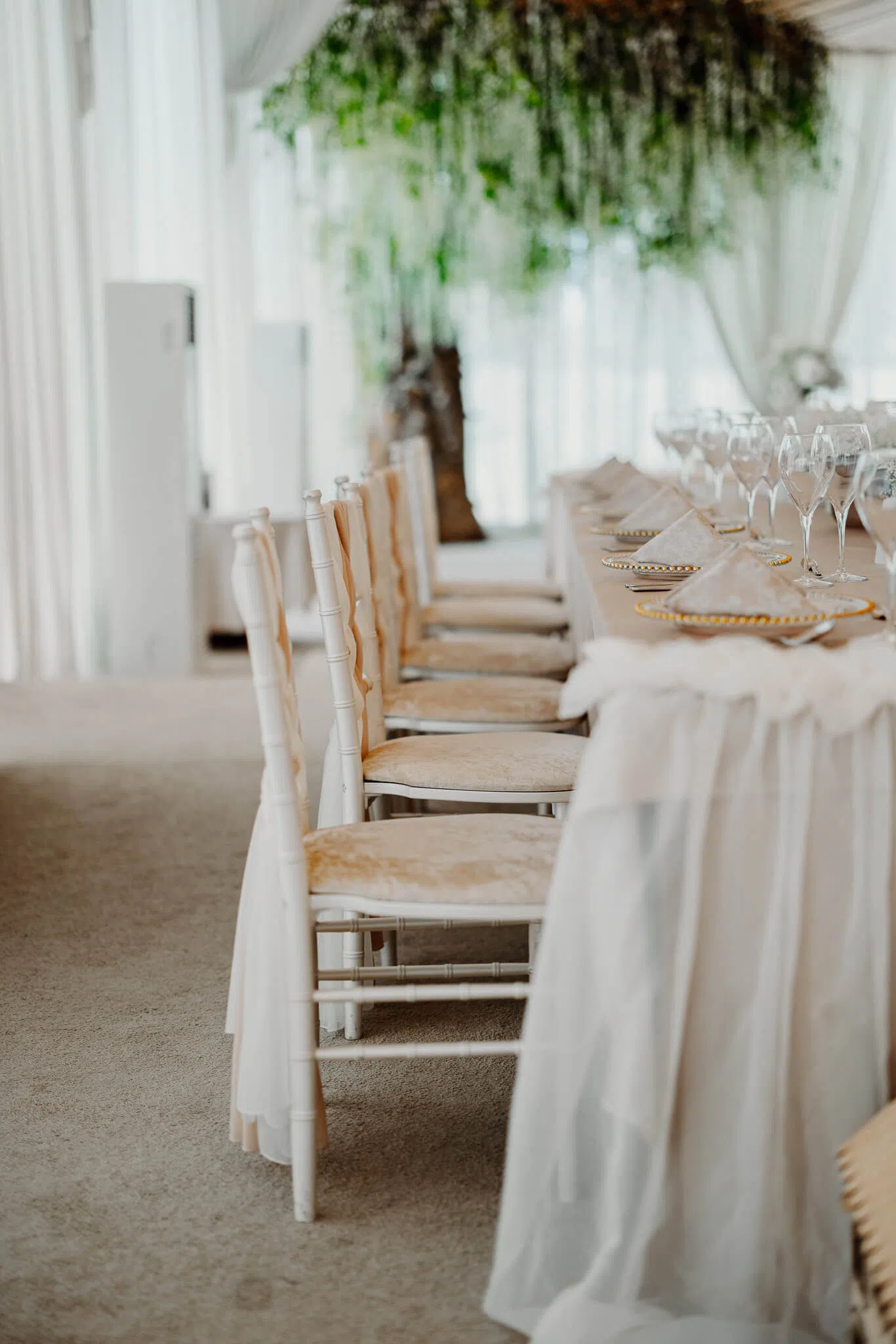
The venue is the first major decision, taken as soon as you have an approximate guest count. Popular venues are booked 12–18 months ahead, especially for peak-season weekends. Key criteria:
- Capacity: does it fit your guest list?
- Facilities: parking, accessibility, a room for the couple.
- Location: distance from the church and from guest accommodation.
- The package: what the price per person includes (menu, drinks, cake).
- Restrictions: until what hour the music can play, and whether outside suppliers are accepted.
To avoid starting from zero, see the venues I have photographed in my guide to wedding venues in Romania.

How do you choose a wedding photographer?
The photographer is one of the most important investments: photographs are the only visual record of the day, forever. Before signing the contract, check:
- A full portfolio of weddings, not only the best 20 photographs
- The shooting style: documentary, posed, editorial or mixed
- The available packages: hours included and deliverables (album, digital files, video)
- Availability for your date
- References from previous couples
Tip: ask your photographer for a list of recommended locations for the couple session. With the experience of many weddings, they can suggest frames you would not find alone. See what a wedding photographer costs in Romania.
What flower arrangements do you need?
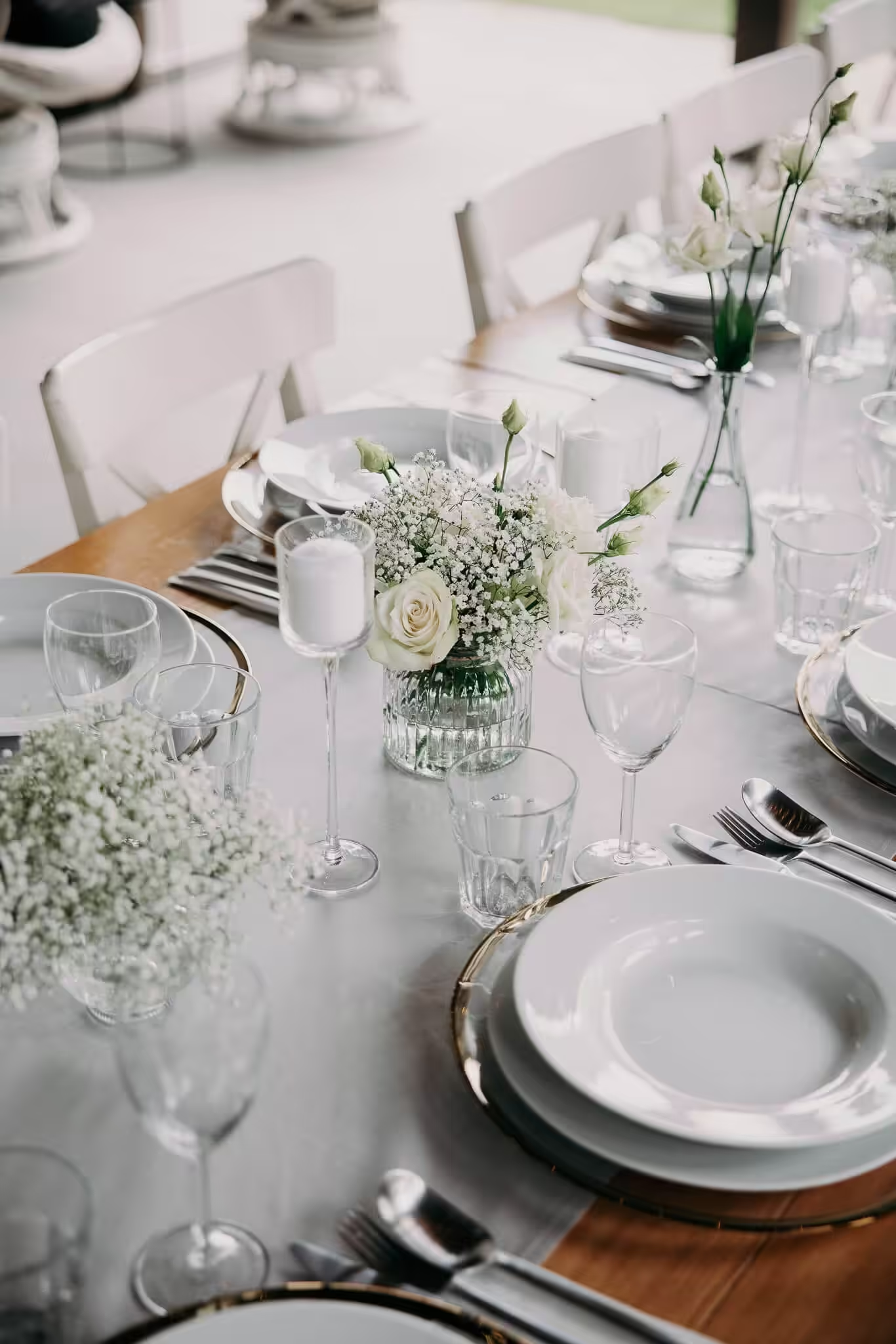
Flowers define the visual atmosphere of the whole day, and the florist and the photographer should work together. The flower budget varies with the season (seasonal flowers are cheaper) and the complexity of the decor. The essentials to order:
- Restaurant decor (centrepieces per table, entrance arrangements)
- Bridal bouquet and bridesmaids’ bouquets
- The godmother’s bouquet
- Boutonnieres and corsages (godparents, parents, witnesses, siblings)
- Candles for the religious ceremony
- Arrangements for an outdoor ceremony, if needed
How do you choose godparents and what is their role?
In Romanian weddings the godparents (nași) are the couple’s future spiritual parents and play an active role in the preparation and in the religious ceremony. There is no fixed rule, but the couple you choose should be one you have an authentic, long relationship with. Traditionally the godparents take care of the rings, the sponge cakes, the red wine and the candles for the religious ceremony. Talk early about responsibilities and make sure they are available for every moment of the wedding day.
How do you organise the religious ceremony?
For many, the religious ceremony is the most emotional moment of the day. Clarify with the priest before booking:
- Availability for your date and time
- Whether he officiates outdoor ceremonies (not all priests accept)
- The estimated duration of the service
- Specific requirements: dress code, positioning in the church, photography restrictions
The ideal is a church close to the restaurant, to minimise travel for guests and keep the rhythm of the day.
What to do one week before the wedding
The last week is about confirming, not new decisions. Contact every supplier to check final details: time, location, access. A five-minute confirmation can prevent an unpleasant surprise on the big day. Final checklist:
- Band or DJ confirmed
- Photographer and videographer confirmed
- Florist confirmed (delivery time, address)
- Make-up artist and hairstylist confirmed
- Photo booth and other attractions confirmed
- Accommodation and transport for guests from other cities
- Seating plan finalised and sent to the restaurant
- Final number of menus sent
FAQ
Răspunsuri scurte la ce mă întreabă cel mai des cuplurile. Dacă nu găsești aici ce cauți, scrie-mi.
Start with your total budget and a rough guest list, because everything else depends on them. Then book the venue and the photographer, in that order, since they fill up first, sometimes more than a year ahead. In practice, the date is chosen from the venue’s availability, not the other way round.
A wedding with 100 guests costs about 25,000–40,000 euro, with most of it going to food and drink, which are paid per person.
If your budget allows, a planner takes care of every detail and adapts everything to your wishes and budget, which helps most when you plan from abroad.
About 12 to 18 months ahead, especially for peak-season weekends in May, June, September and October.
On average 100–150 guests, and about 10–15% of invited guests do not attend.
Any other questions? Write to me and I will reply within 2 hours.Let’s talk

Next steps: see photography prices, the venue guide and get in touch.